

Layered Textures: Cultivating the Trend
A woven chair beside a softly upholstered sofa is a good example of layering at work. The chair’s open weave and the sofa’s textured fabric give you different things to look at. A yellow-green tone in the artwork picks up the accent pillow, helping different pieces belong together.

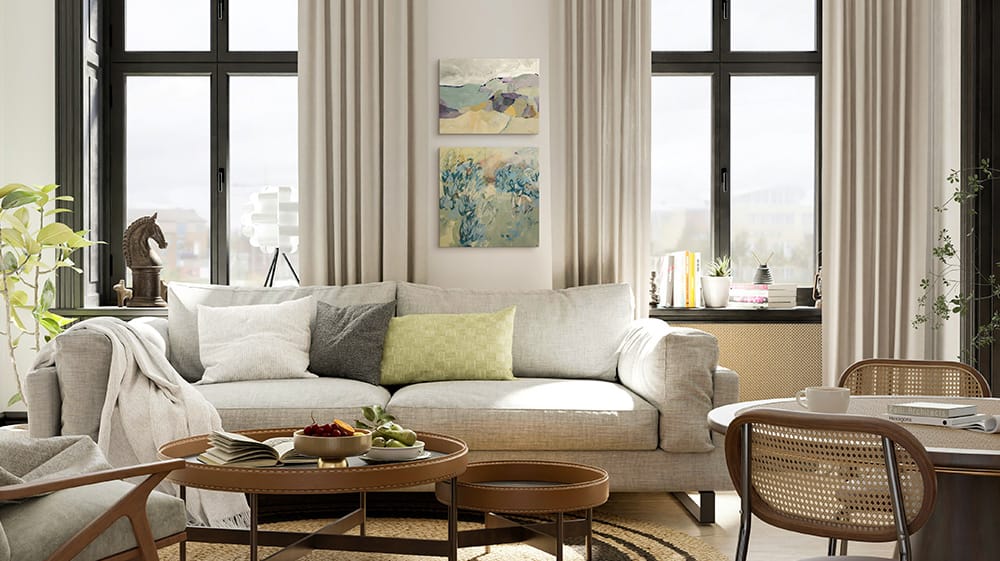
You may already decorate this way. Layering the old with the new. Keeping an older chair when you buy a new sofa, or finding a place for pottery brought home from a trip. Creating a room with a mix of influences and styles, paying particular attention to how the textures work together.
What Is Textured Layering?
Textured Layering combines patterns and finishes with different tactile and visual textures. A velvet chair beside a smooth wooden table introduces contrast through texture. Hang a loose, expressive painting above them, and its brushwork adds another type of textured detail.
The approach has been around for years. Its renewed appeal reflects an interest in comfortable homes that embrace décor of every age and style for a look that feels personal and unique. Designers are seeing more demand for varied finishes and furnishings that feel less precisely coordinated and more collected.
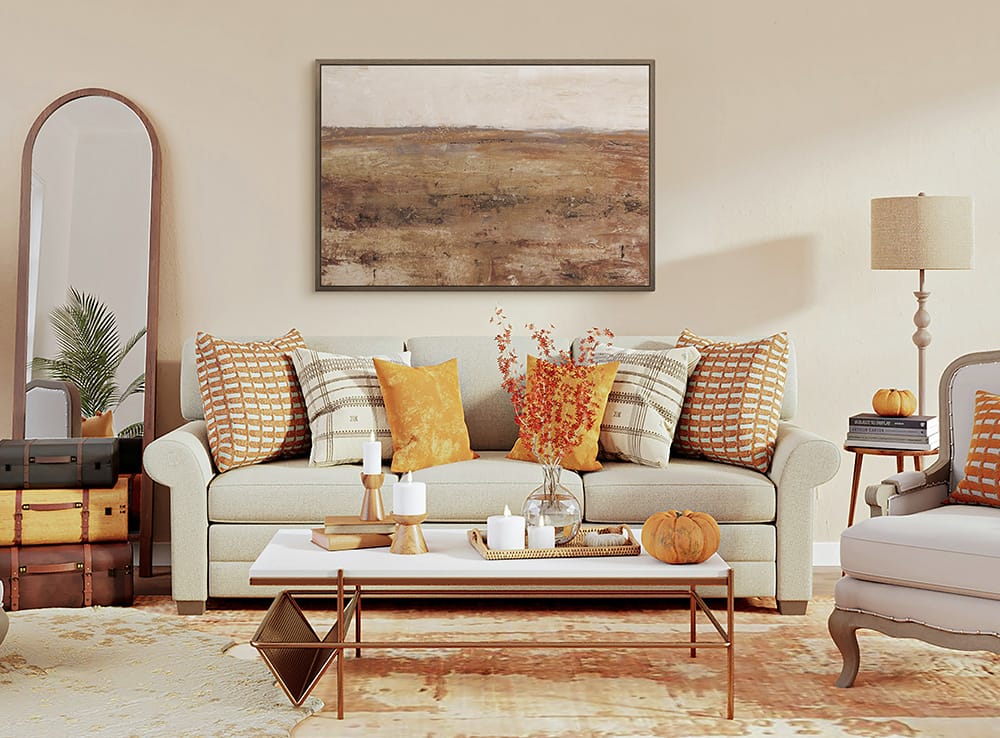
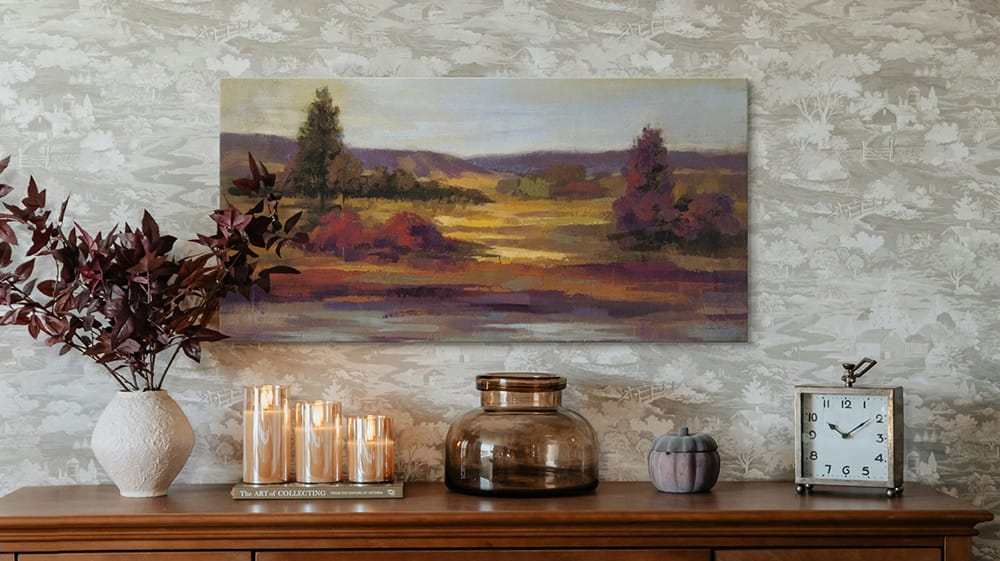
In a layered room, you’ll often notice a few connections among otherwise different pieces. Warm ochre tones in the landscape repeat in the pillows and rug. The painting’s broad, soft bands of color sit above the smaller patterns in the cushions. You don’t need every object to share the same connection. Simply look for a few repeated colors or shapes that help bond the items in the space.
Start With Something You Love
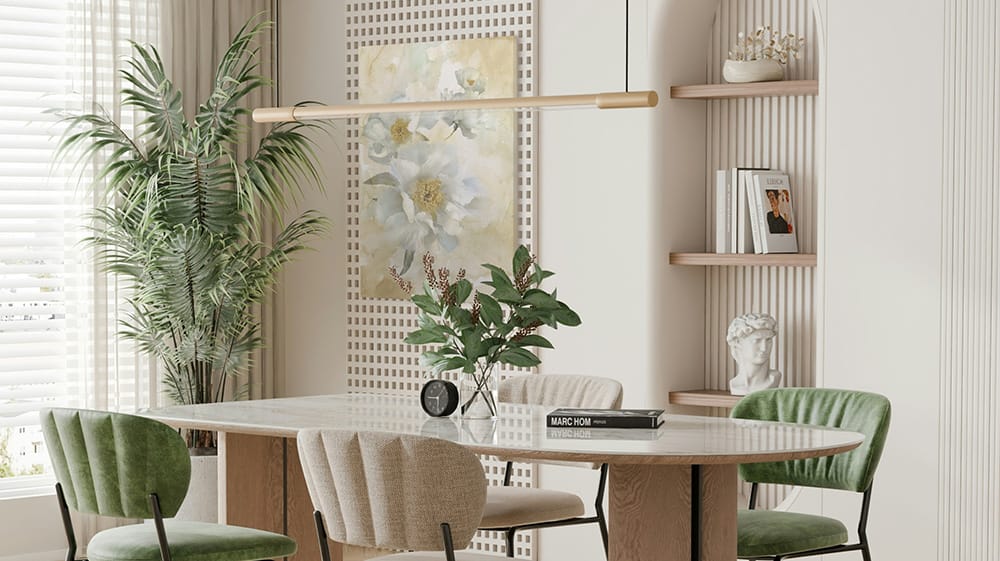
Before browsing for art, choose a furnishing you enjoy enough to build your decor around. A green velvet dining chair is a useful example: you may love its color but want to work it into a room with pale wood and neutral upholstery.
Try looking at softly painted florals. Loose petals offer a contrast to the straight lines of wood paneling, while a familiar tone can connect the painting to the furniture.
The floral artwork shown here offers a soft break from the wall’s grid pattern, while its loose brushwork adds another texture alongside the velvet chairs and wood finishes. Step back to see how those details work together across the room.
Let Pattern Influence Your Art Choice
If your room has a piece with floral upholstery or a detailed rug, look at how much is happening inside the artwork. A busy image adds another pattern to the arrangement. A landscape with a broad sky gives your eye somewhere to pause and take a breath.
Browse the Great Big Canvas landscape collection for compositions with open areas and softer transitions. Picture the artwork beside your strongest pattern. You should still be able to appreciate both.
In an uncluttered room, there’s more room to explore intricate images. Close-up nature photography can reveal the fine lines in a leaf or the uneven surface of stone, the details that stand out even more when displayed at a larger scale.
Bring Texture Onto the Wall
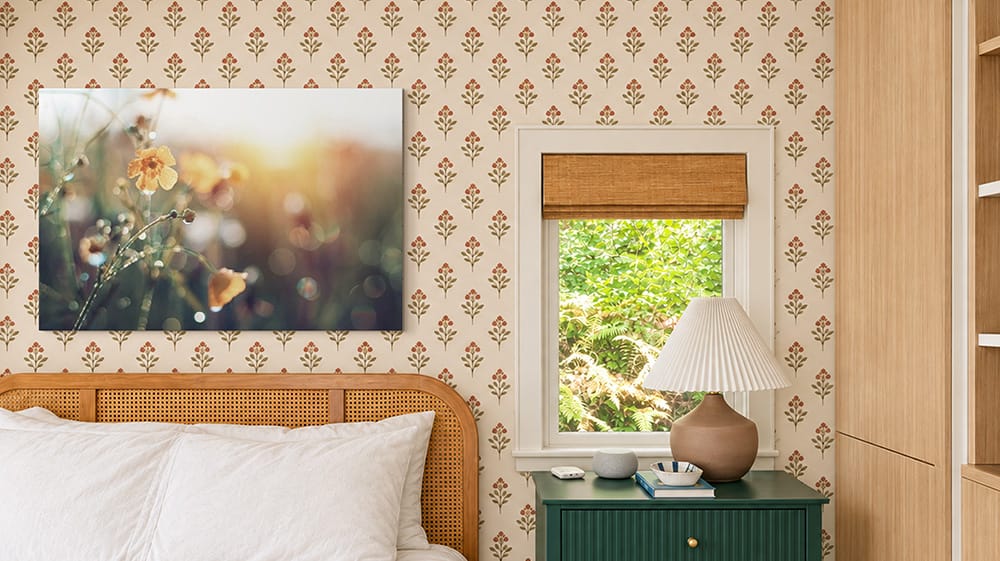
Texture doesn’t have to come entirely from fabrics and furniture. A printed canvas can suggest the roughness of bark or the thickness of painted brushstrokes.
A close-up photograph of dew-covered moss brings fine, delicate texture into view. Here, the softly blurred background keeps the image from feeling too busy beside the patterned wallpaper, while the green tones connect it to the bedside table.
Remember that this is visual texture. Canvas also has its own weave, but printed brushstrokes aren’t raised paint, and a photograph of rough stone won’t actually feel like stone.
Search for Subjects of Meaning to You
An artwork’s subject can be the reason it belongs in your room. A coastal scene might remind you of the town where you grew up. A photograph of a fountain in a favorite park could hang near something you brought home from that trip.
If you’re choosing art connected to your heritage, look for an identified place, artist, or tradition you want represented. That gives the choice more substance than searching for a vaguely “global” look.
The connection doesn’t have to be apparent to visitors. You’ll be the one living with the image every day, but when you show someone around, it gives you a story to share about your life and how you’ve made your home personal to you.
Put the Pieces Together
Take a photo of your room before you shop for art. Use that image to compare an artwork and check how the shapes and textures in the art work alongside the room. This is especially helpful when an image you love feels different from everything you already own.
If taking on a whole room feels daunting, pause. You can build a layered room one addition at a time. This type of style is best built over time, and it can evolve as you do. Start with the furniture you’re keeping, then explore Great Big Canvas for art you’d enjoy seeing above it. Choosing artwork should be fun! Our curation team is here to help, too.
We believe art wields the power to inspire, energize, and transform people and places. Our team of curators and craftspeople are passionate about providing art that meets your unique vision and style.