

Global Maximalism Wall Art: What It Is & How to Style It
Maximalism is often reduced to a simple decorating formula: more color, more pattern, more things. Yet the rooms that execute it well rarely feel like the result of piling everything together. They feel collected.

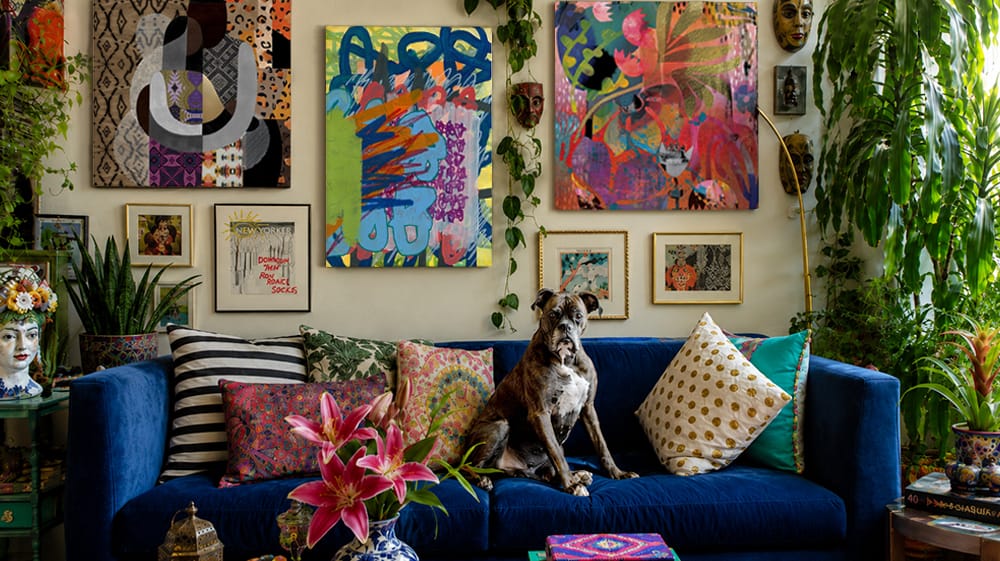
The difference between a lot of stuff versus a collection is the difference between appearing cluttered or curated. The Maximalism style gives you room to display artwork from a diverse range of artists, places, and periods without forcing every piece to follow the same theme. A graphic portrait can hang near an expressive abstract. The pieces may not match in the traditional sense, but they can still belong together.
In Global Maximalism, that richness often comes through culturally grounded layered patterns and a mix of textures that add depth to the composition. It creates space for different artistic traditions, cultural perspectives, and visual histories to meet within the home. Rather than presenting one culture or region as a decorating theme, it puts the focus where it belongs: on the individuality of the curated space. Artwork inspired by places and different time periods may share the same room, but the style connects them in ways beyond geography. The thoughtful layering of those visual elements gives global maximalism its character.
What Is Maximalism in Art?
“More is more” is the phrase most often associated with maximalism. That does not necessarily mean filling every inch of the wall or choosing the brightest artwork you can find.
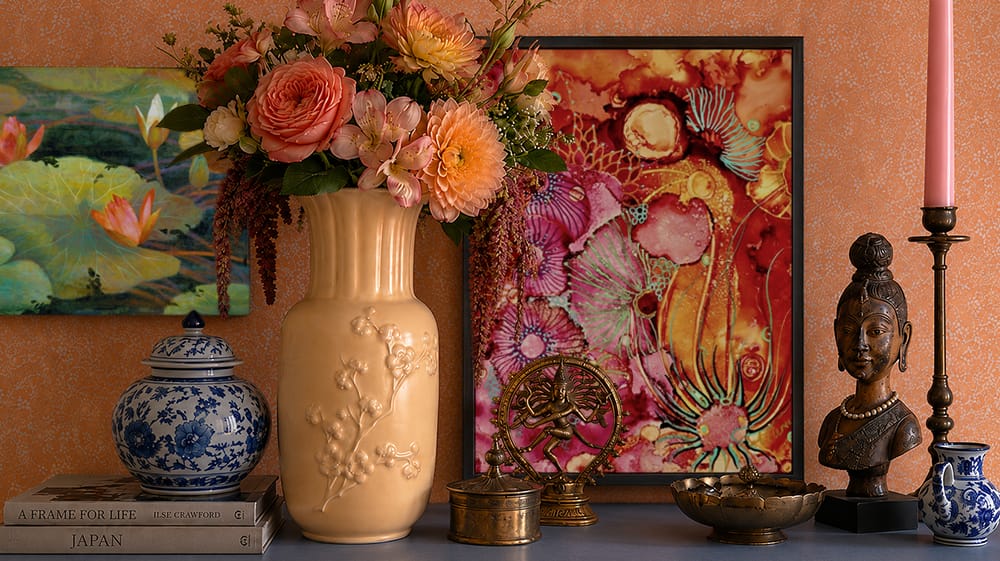
More can come from color, but it can also come from detail, movement, scale, pattern, or texture. One large canvas filled with layered forms can create as much visual impact as a gallery wall. A piece with a limited palette can still feel maximalist when it is rich in contrast and composition.
Maximalist art gives the eye somewhere to wander. You might first notice a figure, then a pattern in the background, then a small color repeated elsewhere in the image. It rewards a second look.
That is one reason it works so well in the home. Artwork does not have to reveal everything at once. A visually rich piece can stay interesting long after the room itself has become familiar.
Maximalism can also come from the relationship between pieces. A floral painting, a Cubist still life, and a contemporary portrait may seem unrelated when viewed separately. Placed together, they can begin to share colors, have certain shapes, or a similar sense of movement.
This is where maximalism becomes personal. You are not shopping for pieces that could belong in any maximalist room. You are noticing the connections between artwork that already means something to you.
The Cultural Impact of Global Maximalism
The art displayed in a home becomes part of its everyday visual language. It is what you see while passing through the hallway, gathering around the table, or sitting down at the end of the day. Over time, those images become familiar.
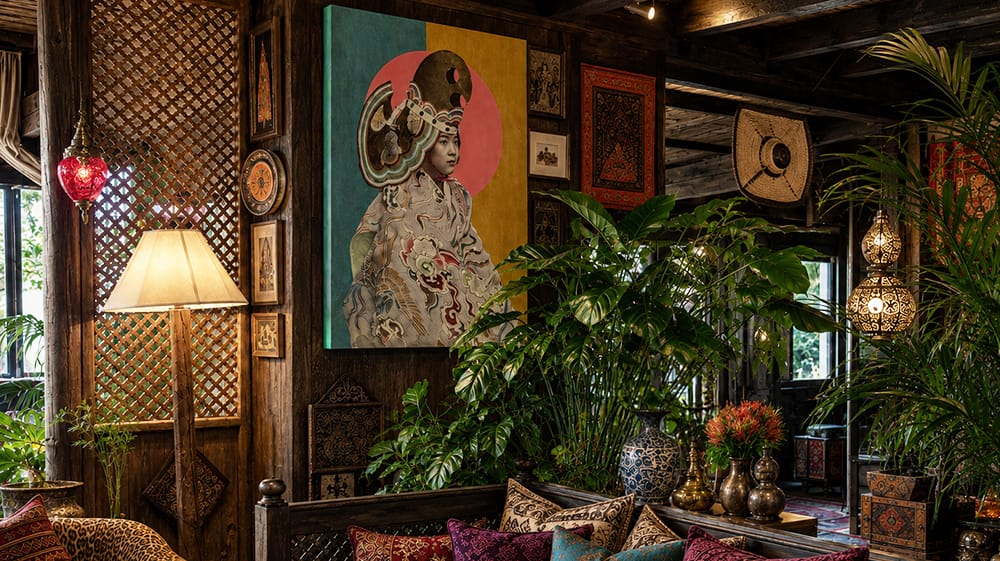
A globally minded collection can broaden the range of places and perspectives represented in that daily view. It can bring contemporary voices into conversation with historic ones. It can also encourage more curiosity about the person behind an artwork rather than treating the image as decoration without a source.
That context is an important part of global maximalism. The word global can become vague when it is used as shorthand for a mixture of patterns or motifs borrowed from different cultures. Without artist names, authorship, or context, those references can be reduced to a generalized look. The room may appear eclectic, but the people and creative traditions behind the art have disappeared.
A more thoughtful approach starts with the artist. Who made the work? What ideas, experiences, or techniques shape it? What feelings or ideas draw you to this particular piece?
You do not need to become an art historian before hanging something on your wall. Simply keeping the artist’s name connected to the work makes a difference. It turns an anonymous visual reference into something created by a person with an individual point of view.
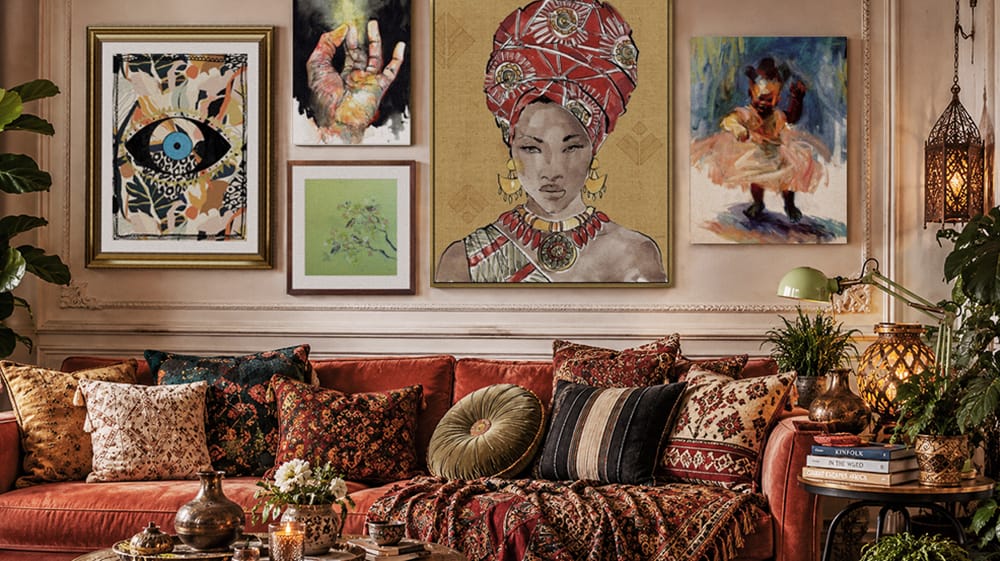
This does not mean every artwork in the room needs to come from the same region or tell a related story. Quite the opposite. The appeal of global maximalism is that it lets each perspective have a distinct feel.
A historic European still life does not need to imitate a contemporary abstract. A botanical painting does not have to use the same palette as a figurative piece beside it. The contrast between them is part of what gives the collection its character.
The result should feel like a conversation, not a costume. More like the room as a fully realized sense of self.
How Global Maximalist Art Fits in Your Space
You do not need a large home or an established art collection to bring this style into a room. Global maximalism can begin with one piece. The key is giving the artwork enough presence to shape what comes next.
Let One Piece Lead
Start with the artwork you would be disappointed to leave behind. Something that pulls you to it, that you can’t help but to consider as you walk by it.
It might have an unusual subject, an intense palette, or a level of detail that keeps pulling you back. That first piece becomes the anchor. Instead of asking whether every new addition matches it, look for smaller points of connection.
One artwork might repeat a color from the anchor. Another might share its rounded forms, strong lines, or botanical subject. A third may have nothing obvious in common except that you love it. That is allowed too.
A collected room needs connection, but it also needs a few surprises.
Repeat Without Matching
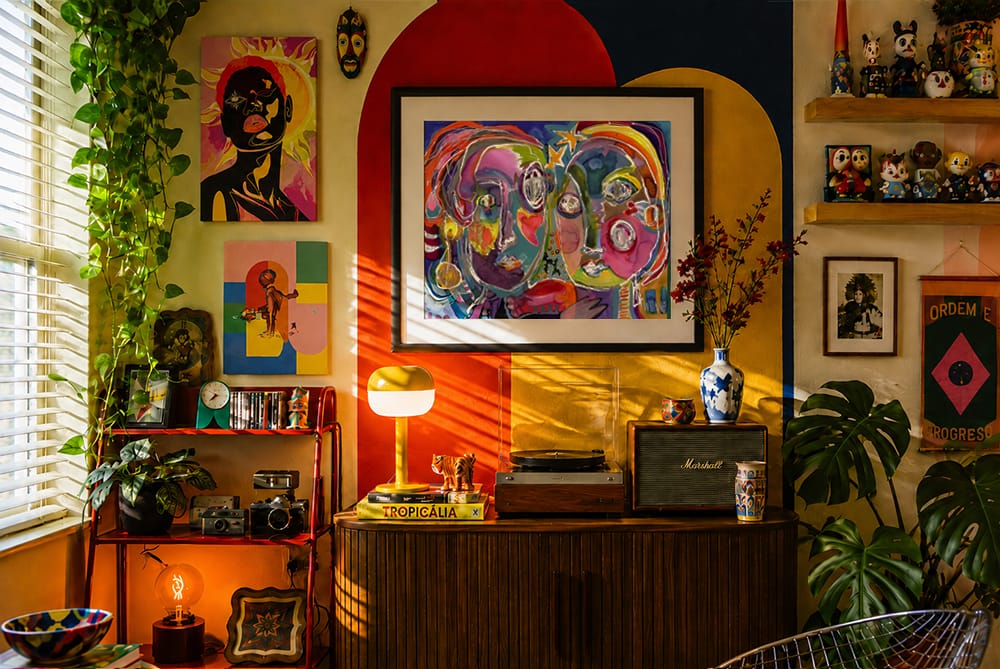
Exact matching can flatten a maximalist room. Repetition is more useful. Each piece should be interesting on its own and include one aspect that ties into the whole.
Look at the smallest details in your anchor piece. For some examples, a deep blue might reappear in another artwork across the room. A checkerboard pattern might connect with a geometric rug. Curved lines in an abstract could be echoed by a rounded lamp or chair.
These repetitions do not need to be immediately obvious. They simply give the eye a path through the space.
Frames can provide another layer of connection. Using one finish throughout a gallery wall will make varied artwork feel more organized. Mixing frames can also work, but it helps to repeat at least one material, color, or profile so the arrangement does not feel accidental.
Mix Bright Art With Quieter Pieces
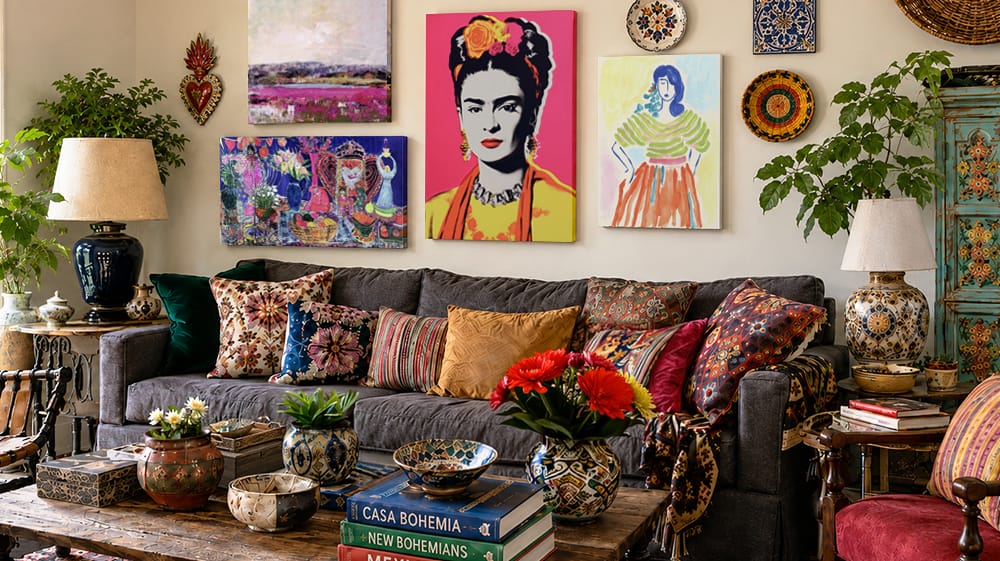
A maximalist space does not need every artwork to compete for attention with bright or high contrast. Interesting pieces are sometimes soft or muted. In fact, the boldest pieces often look better when something quieter sits nearby. A highly saturated figurative work may feel more powerful beside a black-and-white abstract. A detailed botanical can balance an artwork built from larger, simpler shapes.
Think of the room in terms of rhythm. Some pieces move quickly. Others give the eye a place to pause. Depth in the space is the goal.
Use Scale on Purpose
A smaller room may not need multiple small pieces to have personality. One oversized piece of artwork can create plenty of presence without making the space feel cluttered.
Larger rooms can support more layers. A substantial anchor piece above a sofa or console can be joined by smaller works on an adjacent wall. A hallway can carry a series of vertical pieces, while a dining area can make room for a wide horizontal canvas. This style is very personalized.
Available wall space should guide the scale, but furniture matters too. Art displayed over a sofa, bed, or sideboard should relate to the furniture below it rather than floating as an unrelated object on the wall.
Give the Collection Some Structure
The art may be varied. The arrangement does not have to be.
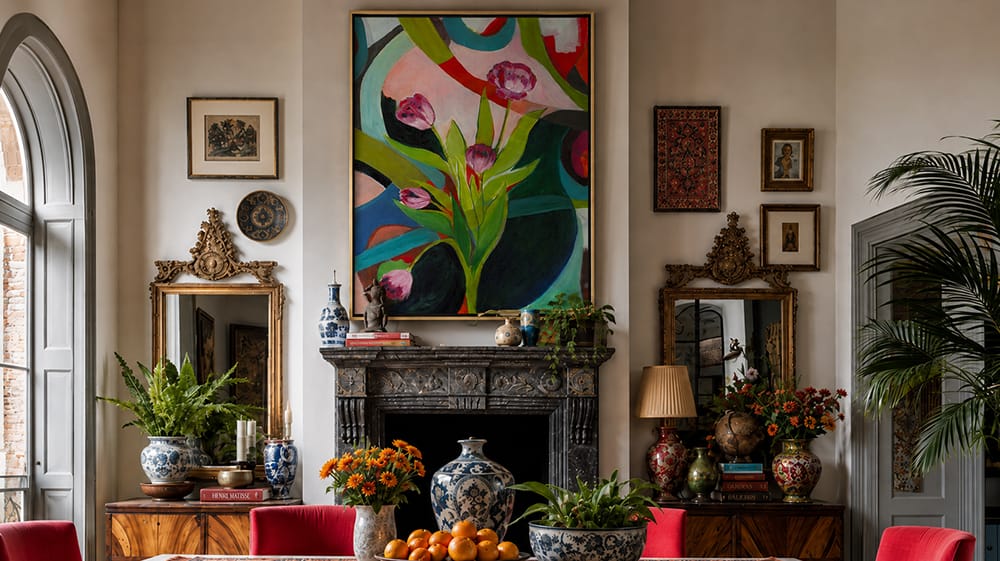
A consistent gap between frames can bring order to a gallery wall filled with different colors and subjects. A central artwork can create a clear starting point. An invisible horizontal line created by aligning the pieces throughout the layout can keep everything visually grounded.
Structure is especially helpful when you are combining art from different periods or working in several formats. It allows the pieces to keep their individuality while still reading as one collection.
More to See, More to Love
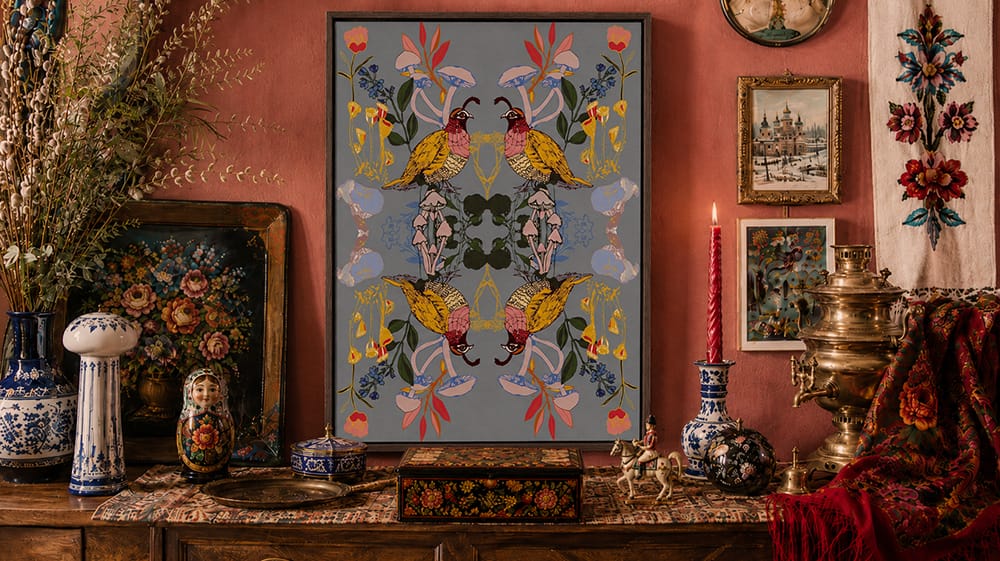
Global maximalism is not about collecting as much as possible, as the more is more phrase suggests. It is about making room for what holds your attention: more color, more history, more creative perspectives, and more art that feels connected to who you are or the feeling you want in that space.
Begin with one piece you genuinely love. Learn the artist’s name. Notice what the artwork brings into the room, then build from there. Take your time. Curate thoughtfully and with purpose.
The finished space may not fit neatly into one period, palette, or decorating style. That is part of the point. A meaningful collection does not have to tell only one kind of story.
Explore the Global Maximalism Wall Art collection at Great Big Canvas.
We believe art wields the power to inspire, energize, and transform people and places. Our team of curators and craftspeople are passionate about providing art that meets your unique vision and style.