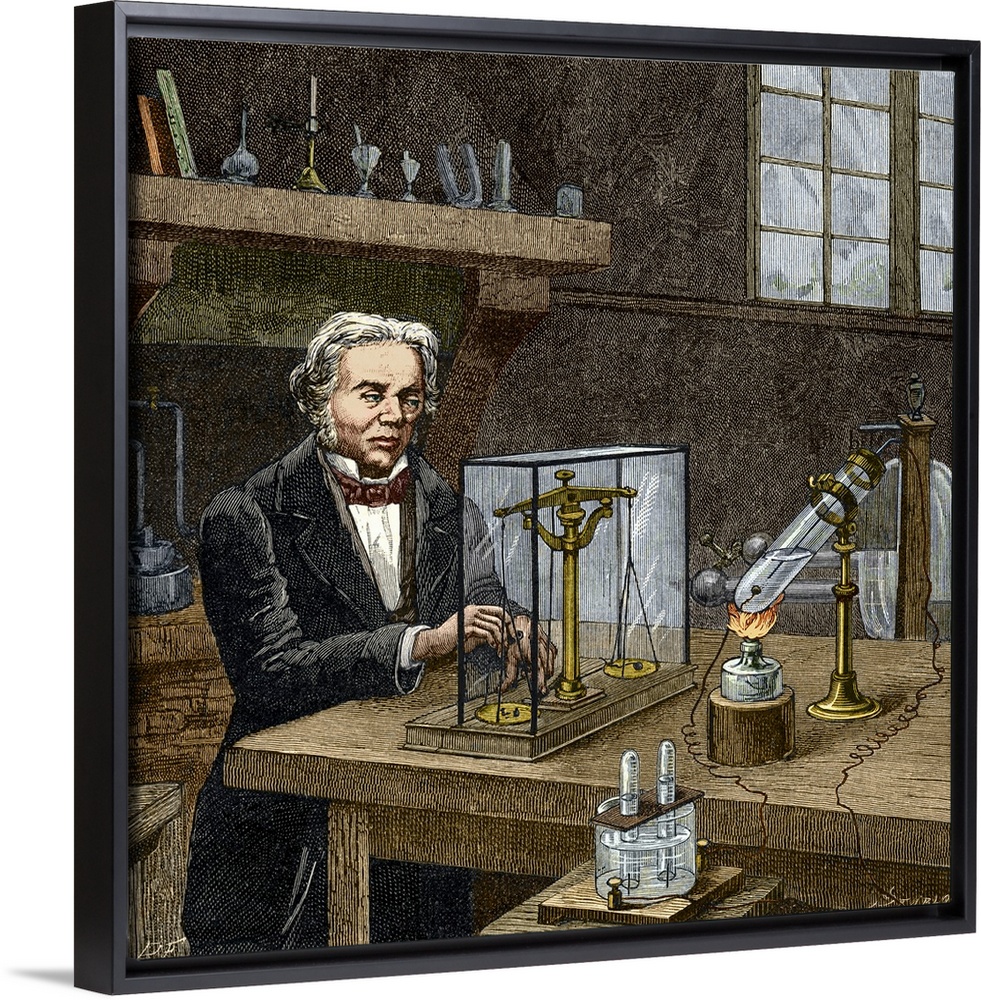
<p>Faraday's electrolysis experiment. Historical artwork of British chemist and physicist Michael Faraday (1791-1867) experimenting on electrolysis in 1833. The test tube (lower right) contains two platinum electrodes dipped in molten tin chloride heated by a spirit lamp. The electrodes are connected to a battery (not seen) and a voltmeter (bottom centre). The amount of hydrogen and oxygen gas produced in the voltmeter is a measure of the amount of electricity used. Chlorine is produced at the positive electrode (wire) and tin at the negative electrode (round coil). Weighing the coil showed that the amount of tin deposited was proportional to the amount of electricity. From Physique Populaire (E. Desbeaux, 1891).</p>


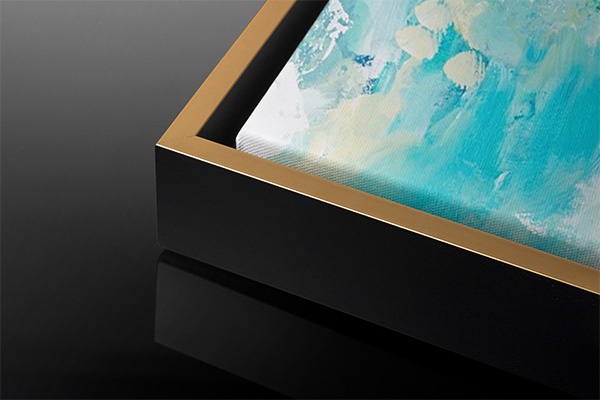
Elevate your home or office décor by adding a modern floating frame to your canvas art print. Finishing your gallery wrapped canvas with a floating frame enhances the beauty and detail of our giclée art prints. Handcrafted from solid wood, and available in multiple finish colors, there’s sure to be a frame to accent your canvas art print.
<p>Create the illusion that your new gallery wrapped canvas art is suspended in space with our premium 1.75” inch deep floating frame. With several available frame finishes to choose from, you’re sure to find the color that best accents your handcrafted art and personal décor.</p>

<p>Our floating frame prints feature giclée printed canvas produced with high quality, UV-resistant, environmentally-friendly, latex inks and artist grade, polycotton canvas. We pride ourselves on color accuracy and image clarity to ensure your new canvas print lasts for years to come.</p>
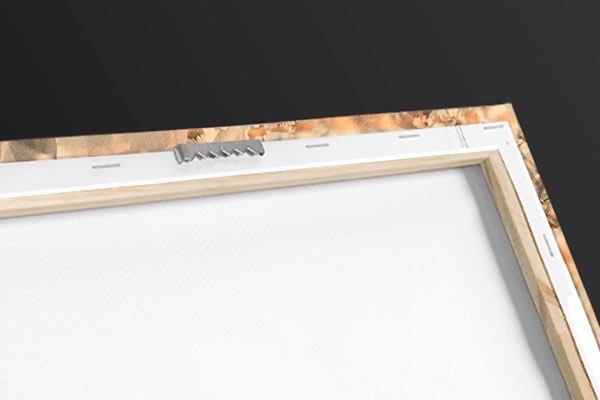
<p>The lightweight construction and pre-installed sawtooth hangers make installation a breeze. Even though they're light, our rock-solid construction boasts long-lasting durability.</p>
 Educational
Science
Famous Scientists
Illustrations
Sheila Terry
Educational
Science
Famous Scientists
Illustrations
Sheila Terry

