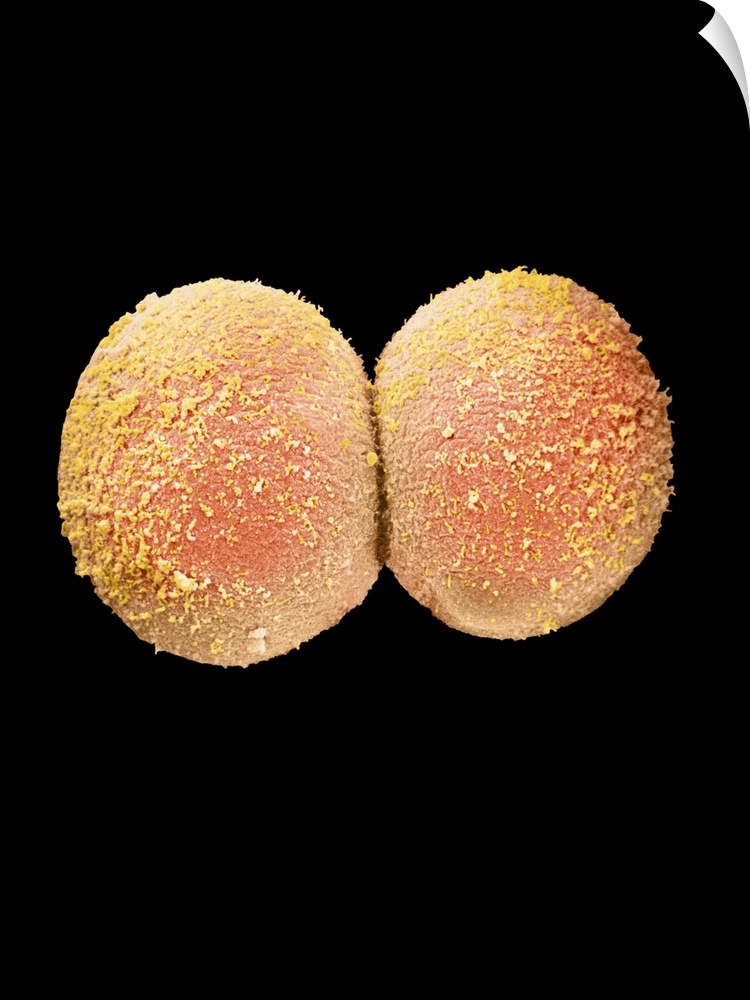
<p>Two-cell embryo. Coloured scanning electron micrograph (SEM) of a human embryo at the two cell stage, about 30 hours after fertilisation. Still to form into a morula, a cluster of cells, each large rounded cell here is called a blastomere. The smaller spherical structure (at lower centre) is a polar body which will degenerate. The surface of each cell is covered in microvilli. This embryo has only undergone one cell division. The cells will continue to divide and eventually will transform into a human foetus composed of millions of cells. At this two-celled stage, the embryo has not yet implanted in the uterus (womb). Magnification: x830 at 6x7cm size. mag x 625 at original 6x7cm.</p>




An easy-to-install, peel and stick wall art solution, our wall peels are perfect for dorm rooms, kids’ rooms, holidays, special events, and more. Consider ordering repeatable patterns for wallpaper, attempt your own wall mural, or display motivational artwork around the office. Stick them anywhere for a quick décor refresh or to add a splash of inspiration in your office corner.
<a href="/search/?q=wall-peels">Wall peels</a> are created from a premium matte vinyl fabric backed with strong, reusable adhesive for a super durable wall art solution. This temporary wall art solution can stick to virtually any surface. And if you change your mind later? Wall Peels are easy to remove and reapply anywhere you like.

<p>Wall peels are created with the same archival latex inks and attention to detail featured in all of our giclée wall art prints. Our full color edge-to-edge printing with long-lasting color allows each image to look its best on this unique material.</p>

<p>The holidays are over in the twinkle of an eye, and kids’ tastes can be unpredictable. But with this easy-to-install peel and stick solution, you can temporarily refresh any space in your home, easily and affordably. With the simple adhesive backing, you can even let your kids be a part of the installation process.</p>
 Educational
Science
Human Anatomy
Yorgos Nikas
Educational
Science
Human Anatomy
Yorgos Nikas

